


In boardrooms across the Gulf’s most ambitious enterprises, logistics still wears the faded uniform of a necessary evil – a grudging entry on the cost sheet. Any serious student of global commerce, however, knows that what separates a fleeting brand from an enduring commercial force has little to do with the product itself. It hinges on whether a supply chain remains a mere mechanism of physical movement or evolves into something far more consequential – a defensive rampart and an offensive lever, deployed simultaneously. We have crossed into an era where competition is no longer product against product, but supply chain against supply chain. And in a Gulf market propelled by velocity and vaulting ambition, that contest is unfolding right now.
Table of contents
- The Invisible Leakage: Where Capital Quietly Escapes
- The Art of Incoterms: Sovereignty Before the Cargo
- Fulfilment as Experience Engine: Beyond the Warehouse
- The Geography of Compliance: Barrier or Launch Pad
- Risk Intelligence for a World of Permanent Disruption
- Strategic Partnership: Deeper Than a Transaction
- Conclusion: From Costs to Profit

The Invisible Leakage: Where Capital Quietly Escapes
Savvy investors around the Gulf recognise that the first freight quote they receive is almost never the real cost. The true haemorrhage hides in the blind spots: demurrage charges accumulating at major seaports, storage fees that appear without warning, and the quiet, corrosive force of opportunity cost when inventory arrives late. Each silently carves away at margins. Strategic logistics begins, therefore, with a forensic understanding of total cost of ownership. When a founder selects the cheapest routing without weighing schedule dependability or the efficiency of customs processing at regional gateways, they are, in effect, wagering the stability of their entire enterprise on a phantom economy – one that tends to evaporate the moment a customs hold materialises or a chokepoint on the Arabian Peninsula’s shipping lanes tightens.

The Art of Incoterms: Sovereignty Before the Cargo
A fog of jargon surrounds the Incoterms, often dismissed as nothing more than legal shorthand. For the Gulf’s sharper financial minds, these codes amount to a detailed map of risk and a subtle lever on liquidity. Surrendering complete control to a supplier for shipping may offer a veneer of ease, but it systematically strips away command over the goods’ trajectory, unloading expenses at Gulf discharge ports, and the essential capacity to pivot when a global disruption strikes. Trade terms that allow you to nominate your own logistics partner, by contrast, deliver genuine negotiating power, transparent tracking, and – most critically – room to manoeuvre in a crisis. Sovereignty over a shipment is claimed not at the moment a vessel berths, but in the deliberate instant when you decide who will captain the voyage.
Fulfilment as Experience Engine: Beyond the Warehouse
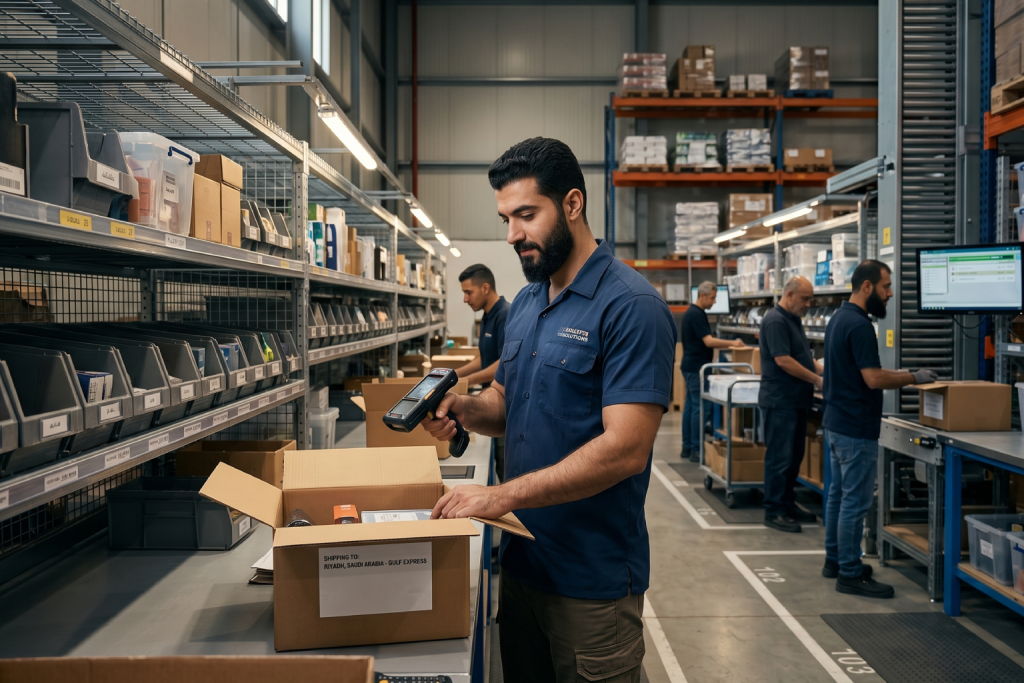
The age of the traditional stockroom – cartons slumbering on shelves until an order wakes them – is over. Fulfilment now sits at the neurological centre of modern trade, especially for e-commerce founders and high-velocity operators across the GCC. Proper fulfilment is intelligent data orchestration long before it ever becomes physical handling. It is the seamless tissue connecting the sales platform, real-time inventory visibility, packing cadence, and last-mile precision. Investors who grasp this metamorphosis understand that inventory turns matter far more than the volume parked on racks. Moving a product from a warehouse location to a doorstep in Riyadh, Dubai, or Kuwait with the least possible human touch and the highest possible digital fidelity is what forges brand loyalty that outlasts a marketing campaign.

The Geography of Compliance: Barrier or Launch Pad
In the Arabian Gulf, customs clearance remains the chokepoint that can suffocate even the most lavishly funded ventures. Ignorance of technical regulations, or sloppiness in the classification of harmonised system codes, is not some minor clerical slip – it is a gamble on the enterprise’s standing with Gulf regulatory authorities. Leadership in this sphere demands regulatory foresight: studying requirements before a single unit leaves the factory. At this juncture, a logistics partner transforms into a compliance adviser, engineering a flow of goods across seaports and land borders so frictionless that these nodes shift from obstructive checkpoints into springboards. Executed skilfully, the region’s continental linkages become an accelerant, not a bottleneck.

Risk Intelligence for a World of Permanent Disruption
We inhabit what can fairly be called the age of permanent disruption. Maritime chokepoints flare without warning, fuel prices oscillate violently, and geopolitical tremors redraw trade maps by the hour. A Gulf investor who clings to a single, brittle plan is, quite simply, leaving the venture exposed to the elements. Modern logistics rests on strategic elasticity – the ability to switch from ocean freight to airfreight inside a critical window, reroute to a different port, or re‑architect an entire supply pathway in real time. This calibre of management requires a panoramic digital nerve centre. Real‑time visibility of a container’s location is not a tracking perk; it is the foundation of the pre‑emptive decisions that stop a supply chain from fracturing suddenly and expensively.
Strategic Partnership: Deeper Than a Transaction
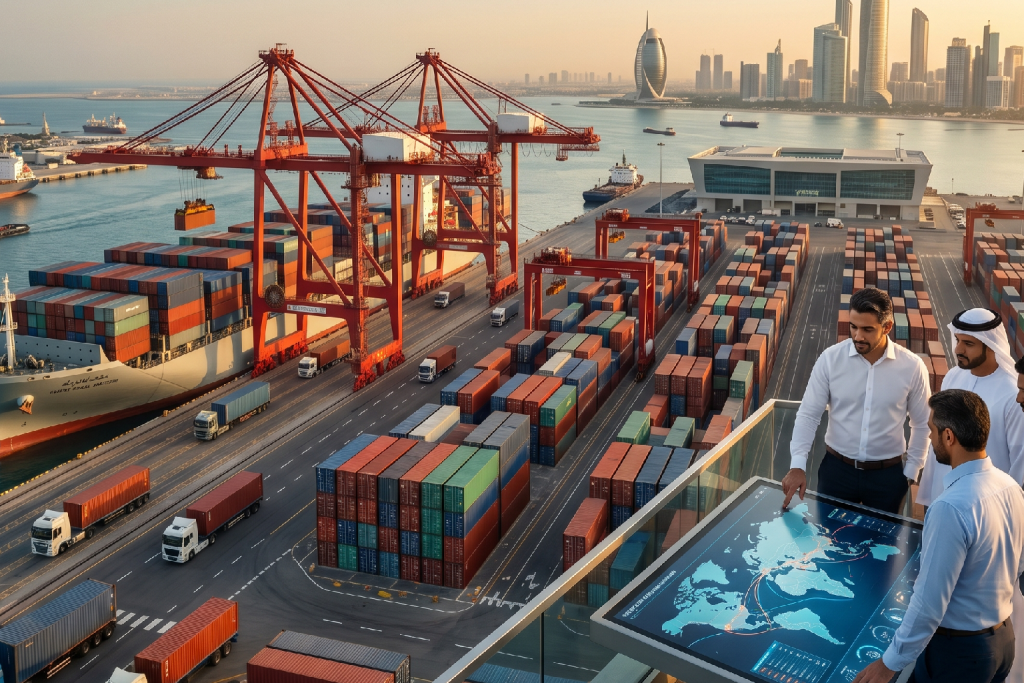
What entrepreneurs ultimately crave is operational silence. Their talent lies in refining product, building brand, and expanding their audience – not in chasing a lost container or unpicking a customs deadlock. That is where a logistics partner who refuses to define itself as a mere carrier enters the frame. Firms that embody a fully integrated philosophy – the kind you see in operations such as AsumSaray Logistics – grasp that the importer’s success is the only genuine guarantee of the logistics relationship. They operate as an invisible team behind the curtain, absorbing complexity, managing systemic risk, and securing the last mile. The result is that the long journey from global factory floors into the strategic heart of Gulf markets becomes a stable corridor for the creation of wealth, not a sequence of anxious lurches.
Conclusion: From Costs to Profit
The quiet conclusion every business owner might carry away is this: your goods are a movable financial mass. The skill with which you govern that motion is what ultimately inscribes the figures on your year‑end balance sheet. Logistics is not a bill to be settled; it is a deliberate investment in speed, precision, and command of your market. The question worth asking, then, is not what logistics costs you, but what it quietly earns or loses for you every single day – and whether your supply chain is steadily building an asset, or silently bleeding one dry.




No comment