

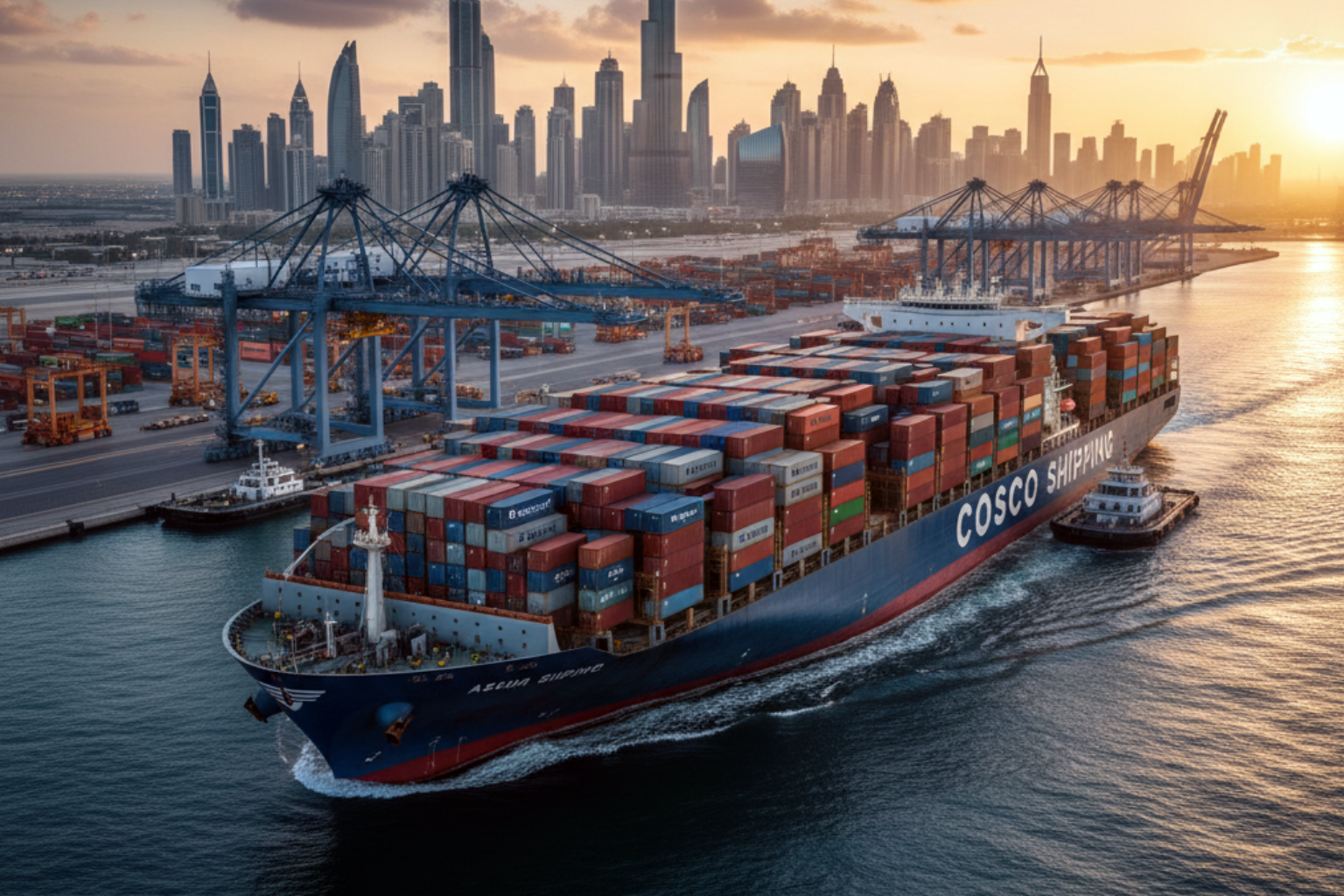
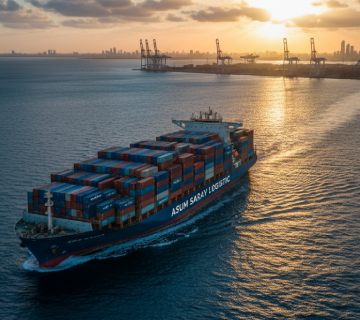
At Berth Number 9 in Shanghai Port, a giant crane lowers onto a container marked with the destination code: AE – JEA. Twenty‑three days later, that exact container will be opened in the Jebel Ali area, where the markets of the Gulf are waiting. Between those two moments, an economic story unfolds – one told not only in numbers, but in the logic of financial sovereignty that separates those who merely pay shipping rates from those who control the cost of arrival. Along 6,300 kilometres of sea lanes and regulatory bridges, the strategies of logistics expansion take shape in their purest form.
In 2025, approximately 3.2 million containers crossed from China to the UAE – an increase of 8% from the previous year. Most of them departed from the ports of Shanghai, Ningbo, and Shenzhen, which together handle a capacity exceeding that of major European ports. This is a testing ground where companies are examined on their ability to decode compliance requirements and manage the embedded cost of every journey.
Amid this shifting global economic landscape, the growing relationship between China and the United Arab Emirates stands as a case study in the dynamics of international supply chains. It represents a strategic axis linking the manufacturing giants in the bustling harbours of Shanghai with the thriving consumption centres among the luxurious oases of Dubai.
جدول المحتويات
- Following the Trail: From Production Ports to Consumption Thresholds
- Engineering Compliance: Balancing Efficiency and Regulatory Demands
- Dubai: The Logistical Pivot for Asian Prosperity
- Pillars of Trust: Building Sustainable Relationships in the Supply Chain
- Logistical Safety Nets: The Shield of Transformation
- From Origin to Destination: The Role of Technology in Enhancing Efficiency
- The Point of Arrival: When the Quay Meets Strategy
Following the Trail: From Production Ports to Consumption Thresholds
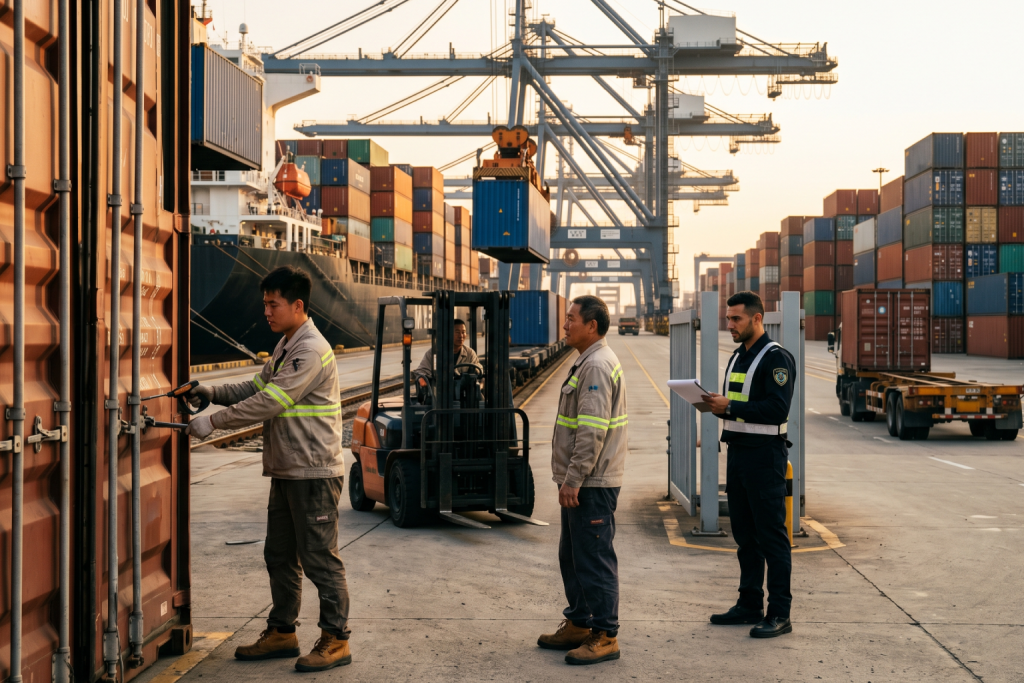
China remains the heart of the global industrial economy. In the Pearl River Delta alone, four of the ten largest industrial cities are concentrated, and Guangdong province exports goods worth $1.3 trillion annually. From its busy ports, thousands of containers depart every day, carrying what is built in its factories and innovated in its laboratories.
At the other end, the UAE – with its strategic location and advanced ports – acts as a vital gateway, redistributing these goods across a network reaching three continents. This alignment is not merely a pairing of two harmonious poles. It expresses a flow equation governed by China’s industrial rhythm and the UAE’s intermediary position. In a 2025 survey by DP World, 72% of regular importers reported that having long‑term shipping contracts with a single logistics partner reduced their total costs by 11% compared to spot transactions. This is the mathematics of cost – translating financial sovereignty into a protected profit margin and opening new horizons for global logistics expansion.
Engineering Compliance: Balancing Efficiency and Regulatory Demands
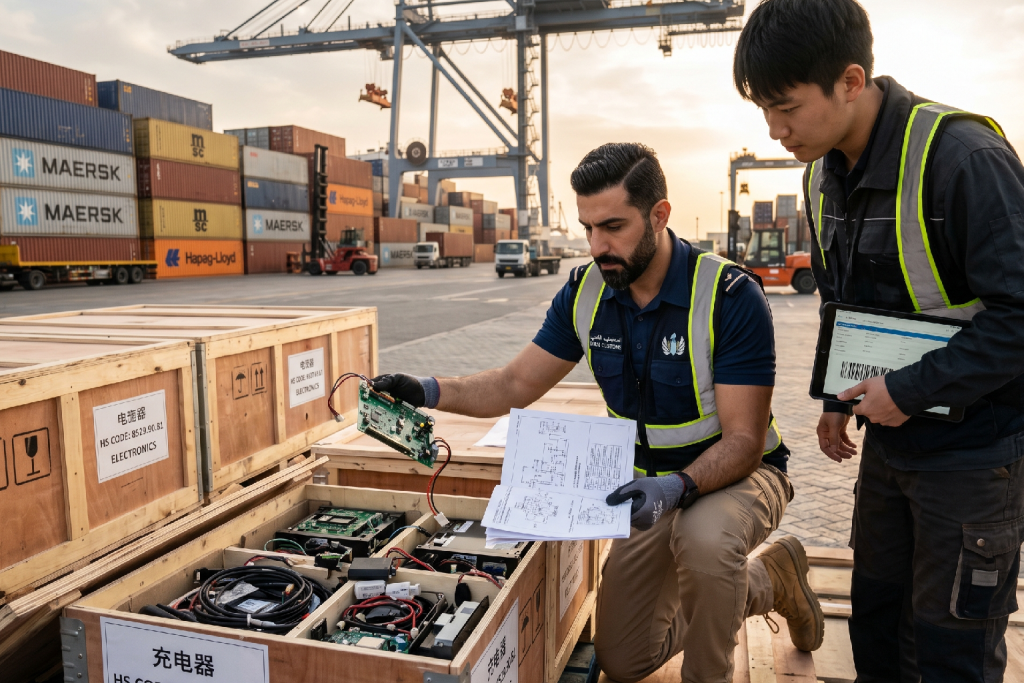
International shipping is never without challenges, and perhaps the most prominent lies in compliance engineering. Every country has its own customs, health, and environmental regulations, requiring precise understanding and strict implementation. These frameworks are not obstacles; they are regulatory tools that protect trade from chaos. But errors are costly. The most expensive mistake is an incorrect HS Code classification – turning an electronics shipment into goods subject to advanced inspection. adding 72 hours of delay and an AED 8,000 fine that cannot be recovered. In 2024 alone, Dubai Customs recorded over 1,200 such incidents involving Chinese goods.
Decoding compliance requires deep expertise and continuous updating of knowledge. Here, the role of a specialised logistics partner becomes evident – an expert navigator who untangles legislation before the container even reaches the dock.
Dubai: The Logistical Pivot for Asian Prosperity
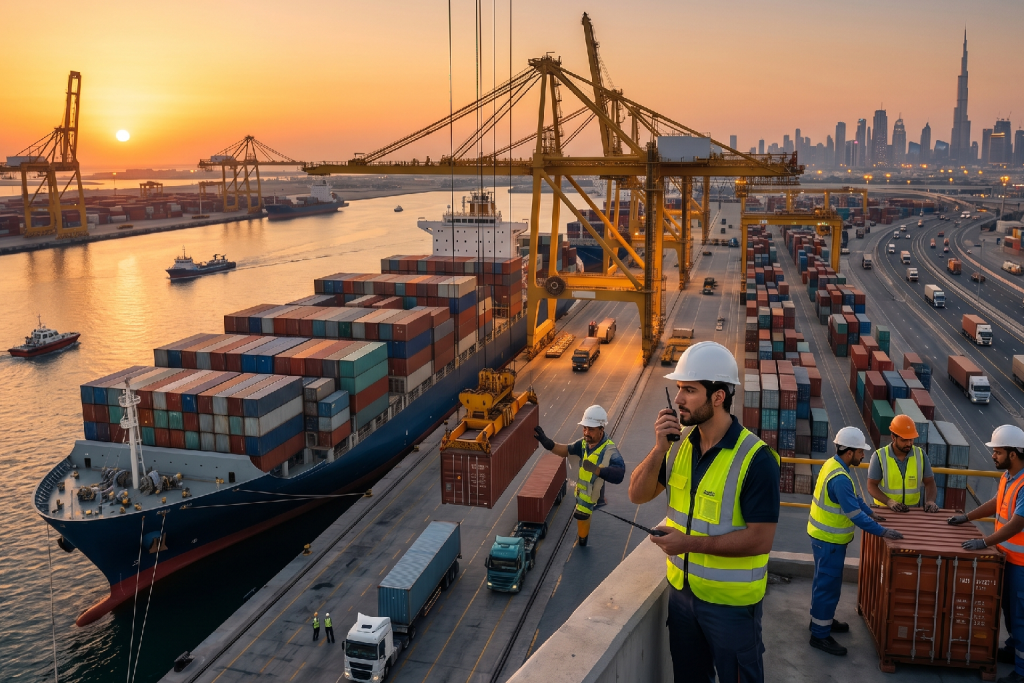
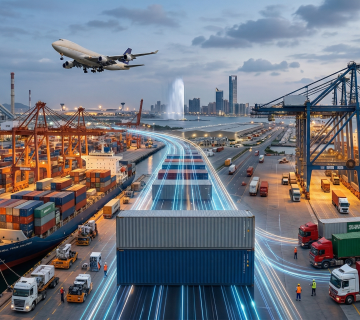
At the heart of this trade interaction, Dubai sits at the apex of global logistics centres. Jebel Ali Port, Dubai International Airport, and Dubai South form integrated systems that process shipments with unprecedented efficiency. No ambitious declarations are needed to see that Dubai has transformed into a logistical pivot, feeding regional and international markets. Its intermediary location and infrastructure investments speak for themselves.
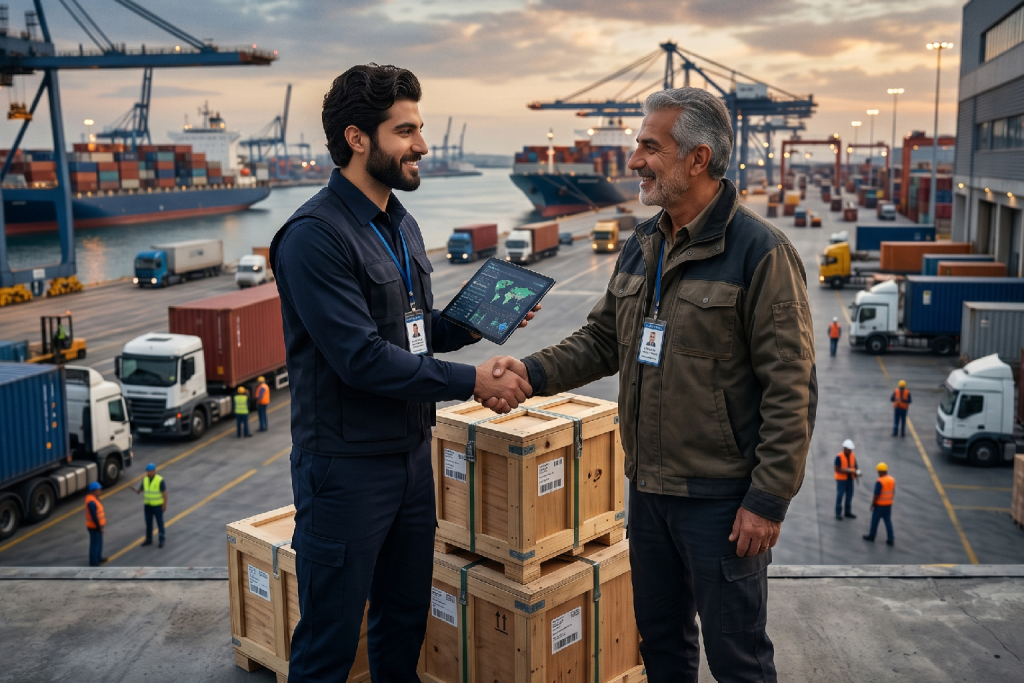
Pillars of Trust: Building Sustainable Relationships in the Supply Chain
The relationship between Chinese factories and UAE markets is a success story written daily. Factories continue to produce in huge volumes, and the UAE provides a strategic outlet for global distribution. This partnership is built on long-term planning, not seasonal transactions. Sector indicators show that stable partnerships absorb shocks faster than spot dealings. During the maritime crisis in early 2026, companies tied to strategic shipping contracts found alternatives within 72 hours, while others floundered in the vortex of spot prices.
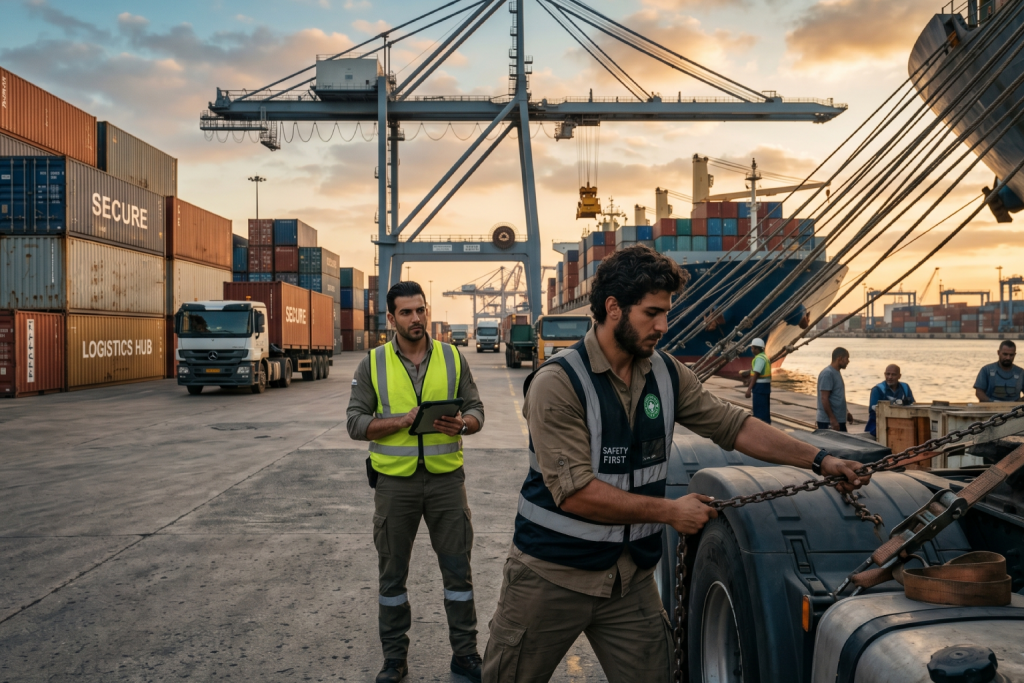
Logistical Safety Nets: The Shield of Transformation
In a world marked by geopolitical fluctuations, the need for logistical safety nets becomes evident. Experienced shipping companies offer integrated solutions including insurance, real‑time tracking, and risk management. These services provide businesses with unprecedented visibility into the shipping journey. enabling them to make proactive decisions that strengthen their competitiveness and maximise their financial sovereignty. Thus, protection moves beyond the concept of luxury to become a fundamental condition for survival in an environment where the global logistics risk index rises every year.
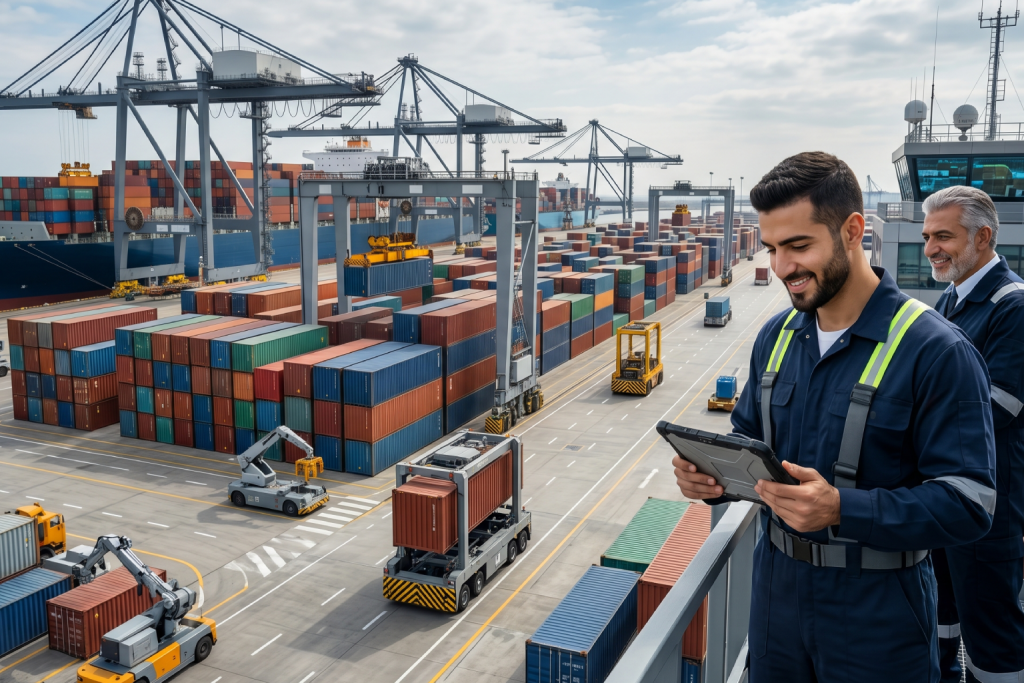
From Origin to Destination: The Role of Technology in Enhancing Efficiency
No discussion of modern shipping is complete without mentioning technology. From smart warehouse management systems to satellite tracking of shipments. and finally to the use of artificial intelligence in data analysis and route optimisation – technology has become the primary driver of efficiency. Moreover, these tools not only speed up operations but also provide a complete picture of the supply chain. This enables companies to make informed decisions and respond effectively to unexpected challenges. For example. predictive failure systems for refrigerated containers now prevent the spoilage of 12% of food shipments that were lost annually on the China‑UAE route – translating directly into savings in total landed cost.
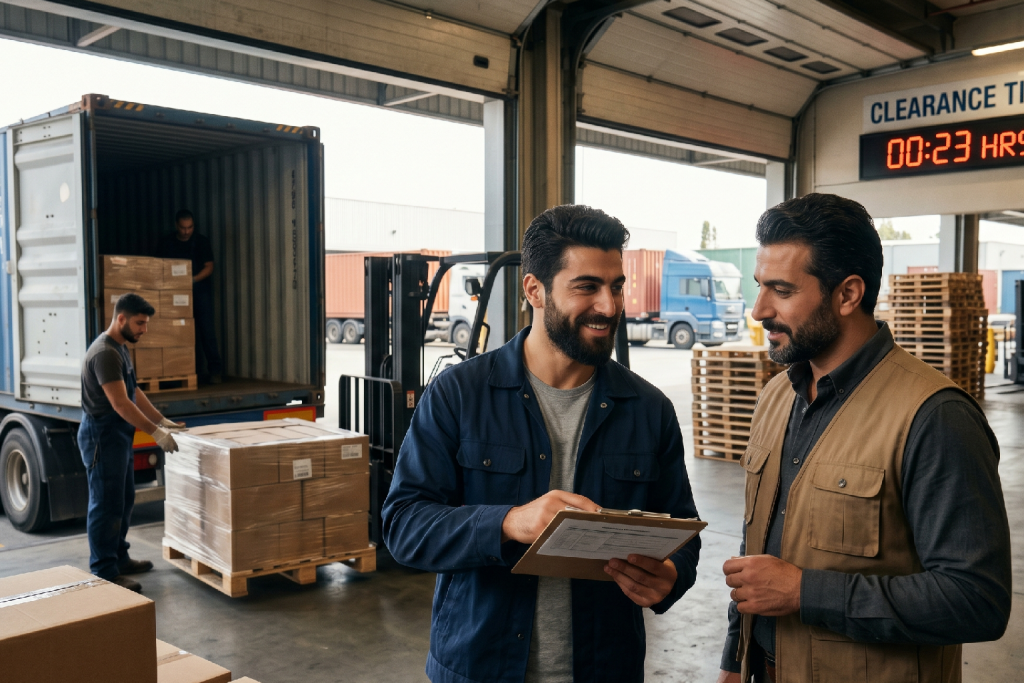
The Point of Arrival: When the Quay Meets Strategy
When the container arrives intact after a 25‑day journey and is cleared by customs within 24 hours instead of five days. and the importer has paid less than planned – a satisfied silence fills the receiving warehouse. That is the silence that the entire logistics strategy works toward. even before the first carton is shipped from the Chinese factory.
On journeys like these – where fuel price, strait turbulence, and the ambiguity of compliance texts all mix – there are logistics entities such as AsumSaray that do not sell space in a container. They sell a shock‑resistant guarantee of transit. A quiet definition of financial sovereignty. translated into a protected profit margin for their clients. paving the way for sustainable prosperity.




No comment